





 Back to top
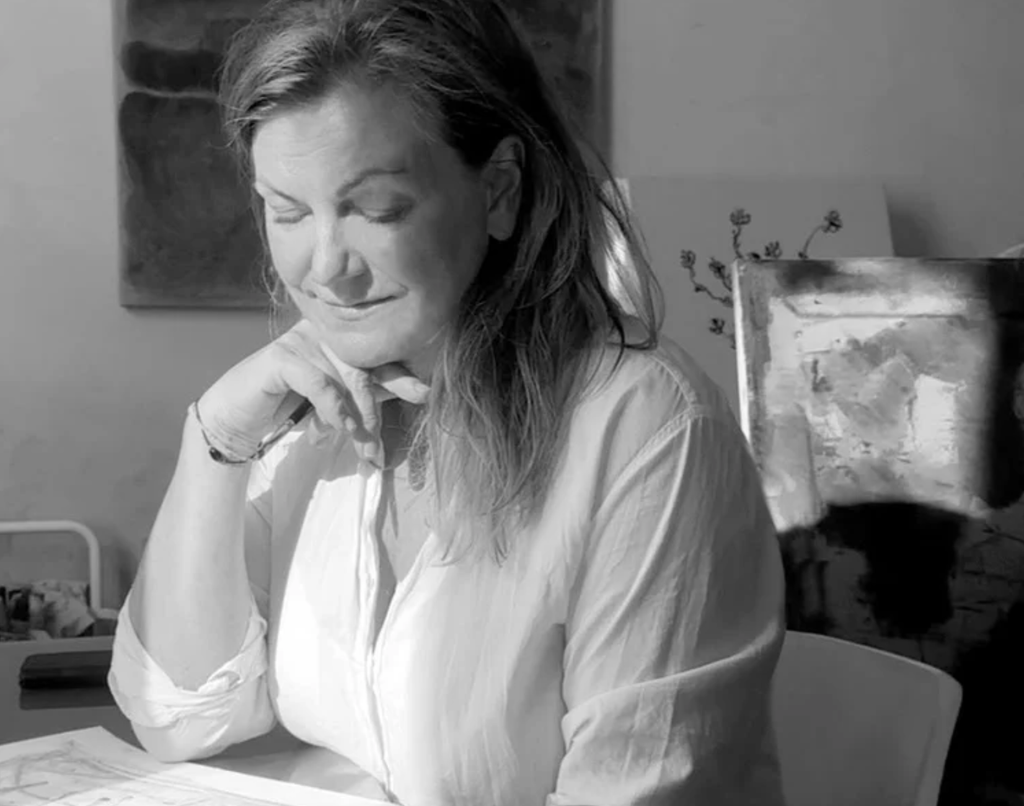
For artist Eva Christin Laska, it all began with an encouragement from her father: “Draw! Copy what you see!” Since then, her curiosity has led her from traditional drawing and graphic design to a distinctive artistic practice where photography, digital techniques, and hand-crafted elements come together.
An early interest in art
Eva Christin Laska has been drawing for as long as she can remember. She was born in Oslo in 1969 to a Norwegian mother and a Hungarian father, and grew up in a home where art and architecture were a natural part of everyday life. Her father worked as an interior designer, and the bookshelves were filled with art books. She particularly remembers the paintings by Caravaggio and the old Renaissance masters, which she would sit and study for hours.
Her father encouraged her to draw, offering a simple piece of advice: “Draw! Copy what you see!”
She heeded the call. By the age of eight, she had already decided to study art in Budapest. The decision was not just about art, but also about her desire to understand her own Hungarian heritage.
– I wanted to learn the language and get to know that part of myself better. I think I had this idea that it would make me feel more whole.
In 1988, at just 18 years old, she moved to Budapest to study illustration and graphic design at what is now known as MOME. She stayed there for four years and became fluent in Hungarian. The curriculum was thorough and traditional, with an emphasis on drawing, anatomy, form, composition, color theory, and craft techniques. This academic foundation has stayed with her, particularly in her work with light, color, and composition. But the path to finding her own artistic voice would take an unexpected turn.
An accident that changed everything
After completing her studies, Laska worked for many years as an illustrator and graphic designer, including on magazines, book illustrations, and visual communication. She enjoyed the work, but eventually felt the need to create on her own terms.
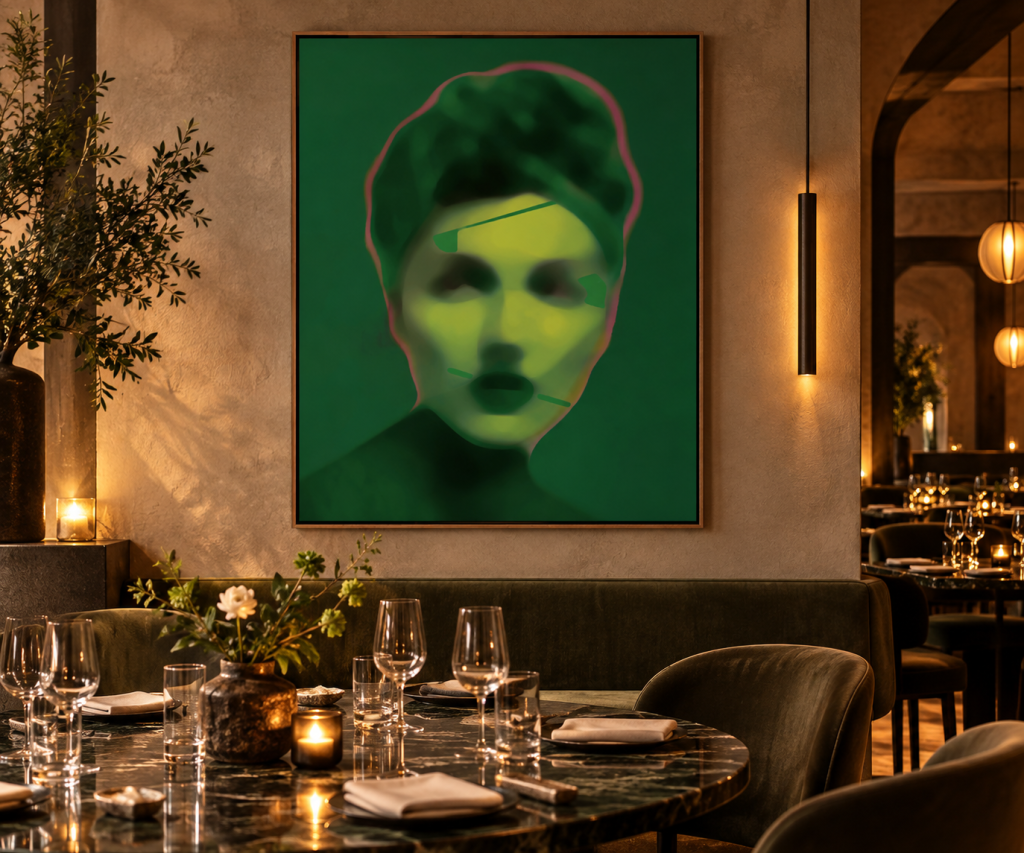
In 1994, while she was working on an illustration and experimenting with photography and image editing, something unexpected happened. An image took on a different look than she had planned. It was more painterly, more open, and had a quality she wanted to explore further.
– It was an accident, really. But I liked the result.
She began to investigate how the expression had come about and whether she could recreate it. That marked the beginning of a working method she has developed over several decades, which she herself has called “accidental art.” Around 2001, she began in earnest to shift from illustration toward fine art. The transition was gradual, but her motivation became increasingly clear: She no longer wanted to illustrate a text or solve a problem for others. She wanted to create her own images.
Chance still plays an important role in her work. Laska rarely starts with a set plan for what an image should look like. She experiments, discards ideas, makes changes, and builds on what she has. Sometimes everything falls into place within ten minutes. Other times, she creates countless versions before she’s satisfied. It’s about being open to the unexpected, while at the same time letting a trained eye determine which possibilities are worth pursuing.
Photography as Raw Material
Although her works are often perceived as paintings, most of them begin with a photograph.
Photography has been a part of Laska's life since she was about eleven years old. While studying in Budapest, she took her Pentax camera with her almost everywhere. She also spent a lot of time in the darkroom of a boyfriend at the time who was a photographer.
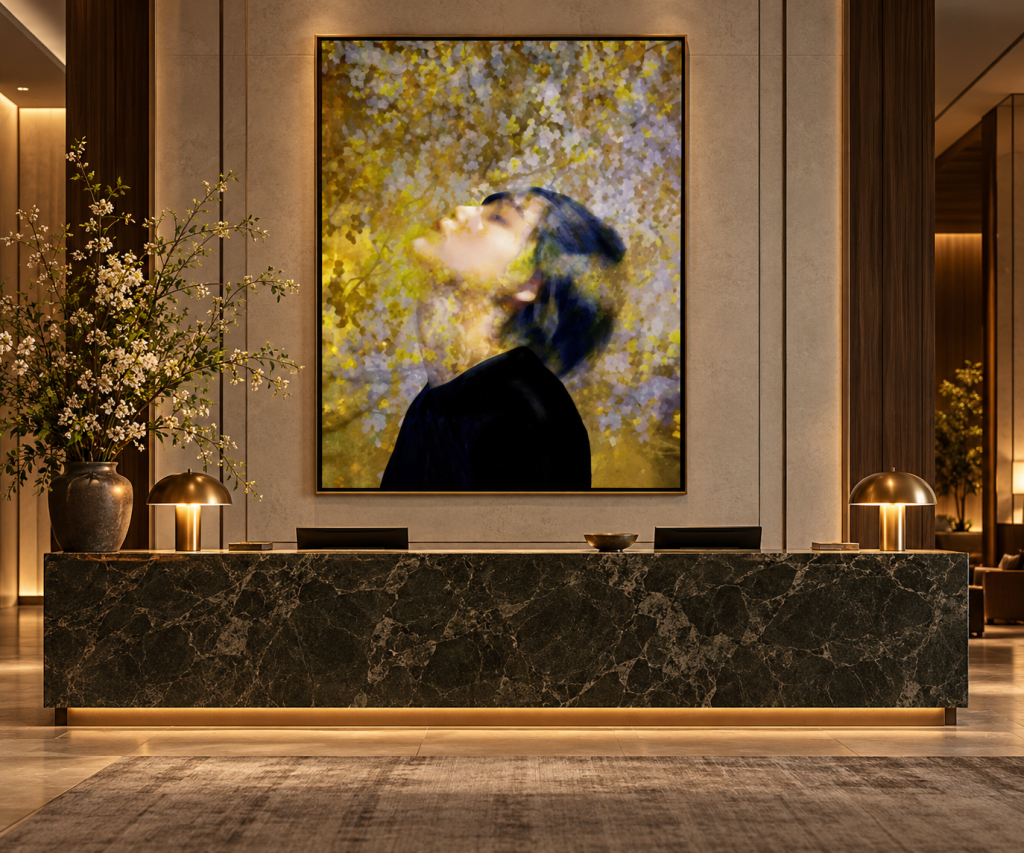
Today, she uses both her own photographs and images she finds elsewhere. It might be a profile, a particular angle, a special light, or a small detail that catches her attention. The original photograph is merely a starting point. Through digital editing, she adds layer upon layer of colors, textures, and various elements. She moves, removes, and adds details to the image, which gradually develops its own character.
– What I'm after isn't necessarily to depict reality, but to create my own form of expression based on it.
It is precisely in this space between the recognizable and the abstract that much of the distinctive character of her work emerges. Photography provides her with a visual starting point, but the final result is just as much about atmosphere, composition, and the interplay of colors.
When the Digital Meets the Hand
Still, the digital process is only one part of the work. Once Laska is satisfied with the image on the screen, the motif is printed on high-quality cotton paper. Then a new phase begins.
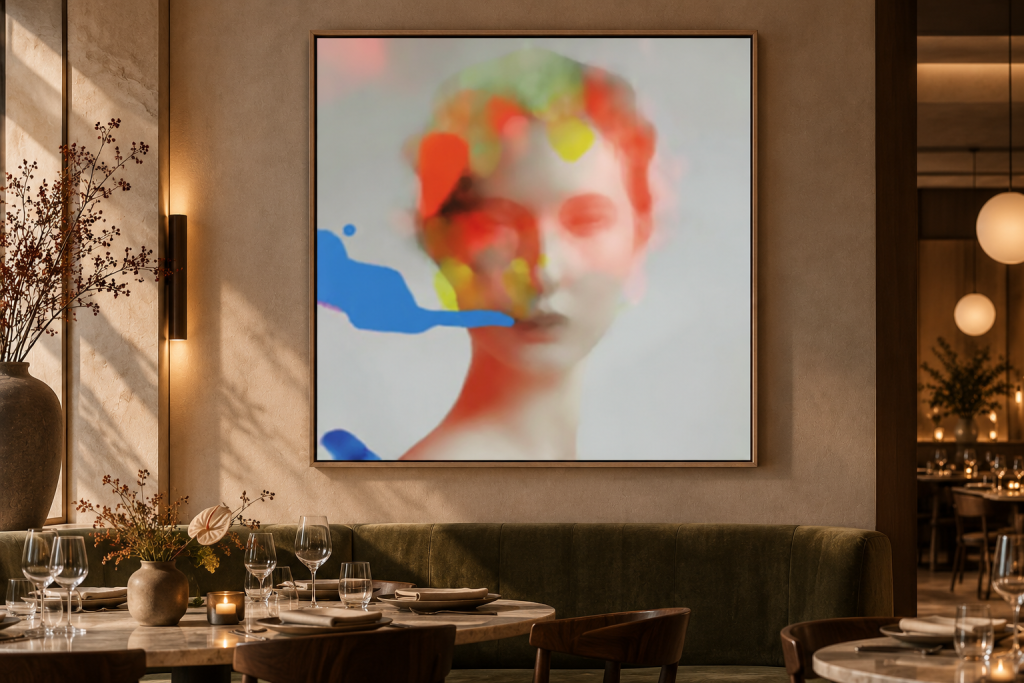
Each print is further refined by hand, using techniques such as dry pastels and watercolors. She enhances colors, adjusts contrasts, adds details, or refines larger sections of the image.
Each design is typically produced in a limited edition of 20 copies. All are numbered and signed, but because each one is handcrafted individually, no two are exactly alike.
– On the screen, I have a lot of freedom to experiment. But when I start working directly on paper, something different happens. Then the materials, my hand, and the surface itself all influence the result.
For Laska, the combination of digital and analog techniques is an important part of her artistic expression. Digital technology opens up countless possibilities, while the handmade element adds a physical dimension and an element of unpredictability that makes each work unique.
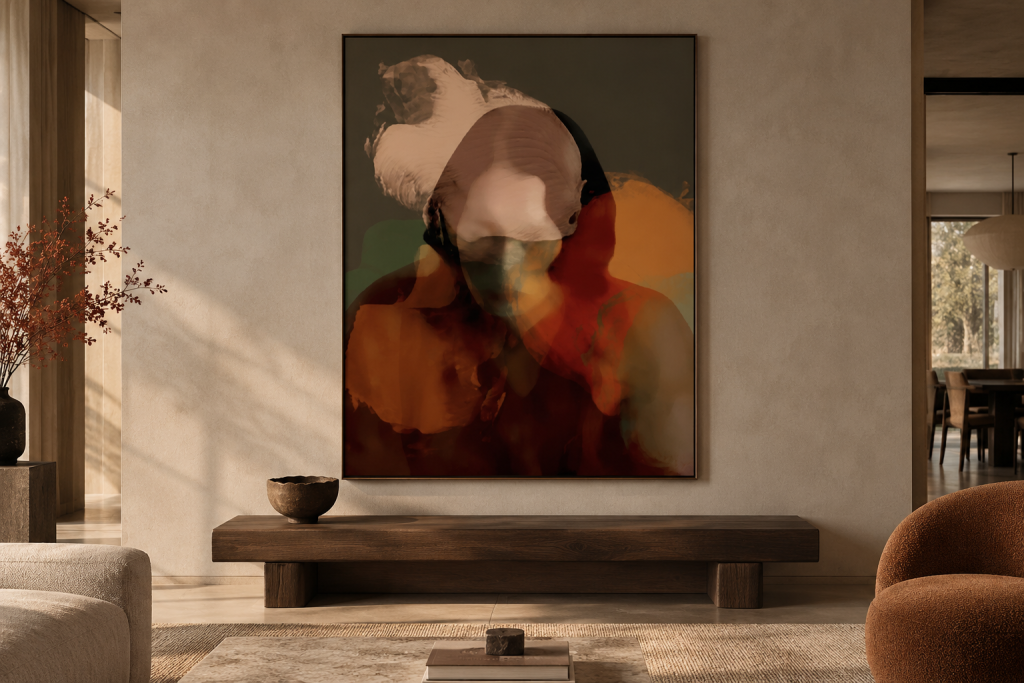
Portraits, Landscapes, and Atmospheres
Laska's subjects range primarily from portraits to nature and landscapes. Despite this variety, there is a clear connection between them: She is more concerned with evoking moods than with telling a specific story.
She wants her photographs to evoke a feeling in the viewer, without predetermining what that feeling should be.
– I want the photos to evoke a feeling in the viewer, but I don’t want to dictate what that feeling should be. I think that’s up to the viewer.
Her portraits often raise questions. Who are the people in the pictures? What are they thinking about? But for the artist, it is not necessarily the identity of the subject that takes center stage.
A face can just as easily serve as a starting point for exploring expression, form, and color. It’s about how the elements interact and what mood emerges when they come together. Colors are particularly important. Laska can spend a long time finding the right shade, and sometimes all it takes is a small adjustment for the image to come together. It’s hard to explain exactly what makes it work. She just knows when it happens.
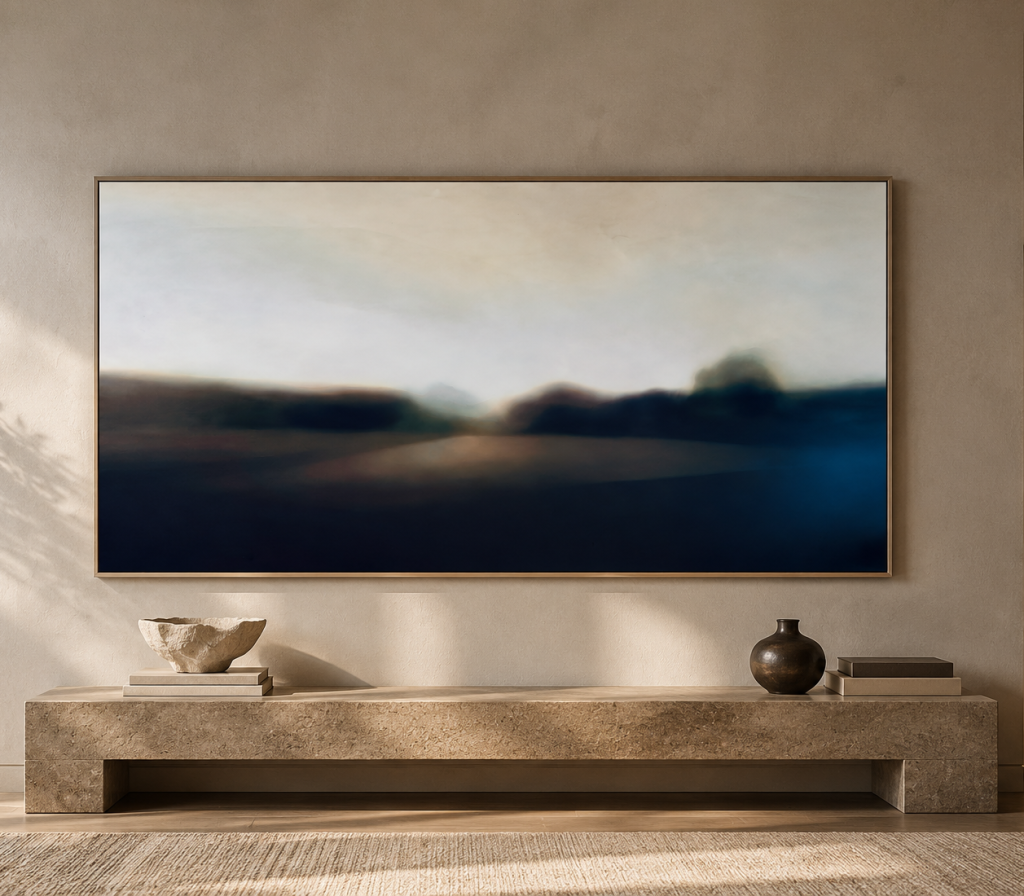
Exploring New Directions
After many years of working in a well-established style, Laska now feels the need to explore new directions. She has begun sketching out ideas for more analog and material-based works, using paint, pigments, paper, and various printmaking techniques.
For several decades, she has explored transparency, layers, colors, and composition digitally. Now she wants to investigate how these experiences can be transferred to physical materials, and how she can develop original works through a more direct, craft-based process.
When Laska looks back on her journey—from the art books of her childhood, through her studies in Budapest and her years as an illustrator, to her current practice—she sees a clear connection. But it has never been a completely straight line. Much of it has been about trial and error, following her curiosity, and discovering possibilities she didn’t know existed.
An accident in 1994 marked the beginning of an artistic method she has been developing for over 30 years. Now she finds herself once again at the beginning of something new. Perhaps this is precisely the common thread running through her artistic practice: the ability to be open to the unexpected, and the willingness to continue exploring.